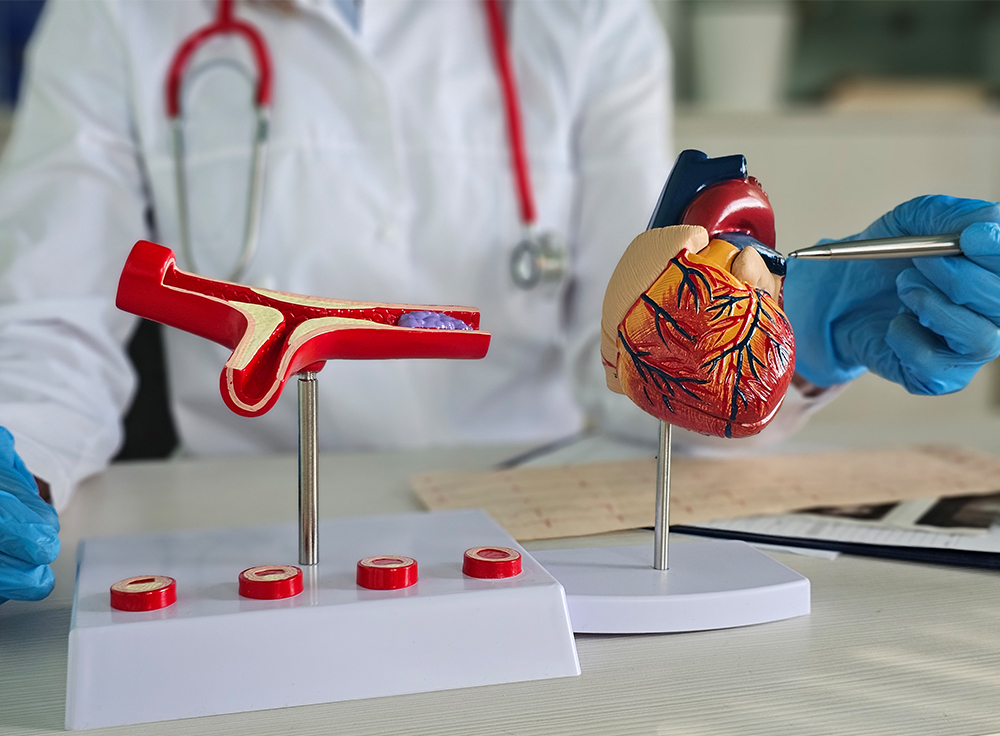
Coronary Artery Disease (CAD) is one of the most common heart conditions, affecting millions of people worldwide. It occurs when the arteries that supply blood to the heart become narrowed or blocked due to plaque buildup.
If you or your loved one has been diagnosed with CAD or is experiencing symptoms, understanding the coronary artery disease treatment process can help you feel more confident about your care. Through this blog, we will provide you with all the relevant information to help you make a wise decision.
The first step in treating coronary artery disease is a proper diagnosis. The medical practitioner will start by evaluating your medical history, the symptoms you are experiencing, and your lifestyle choices. Some of the common symptoms include pain in the chest area (angina), shortness of breath, fatigue, and pain in the shoulders or arms.
If diagnosed with this ailment, there are various types of tests that might be carried out to confirm the disease. They include an EKG, stress test, echocardiogram, or coronary angiogram.
Here’s what the treatment process typically looks like.
The initial phase in the management of coronary heart disease involves the patient receiving a comprehensive medical assessment. This entails your doctor taking stock of your symptoms, health history, and lifestyle choices. Possible symptoms for this disease include chest pain (angina), exhaustion, and shortness of breath.
To diagnose the condition, some of the procedures that can be performed on the patient are an electrocardiogram, a stress test, a blood test, or even a coronary angiography. This helps to assess the extent of the blockage.
If one has been found to have CAD, management of risk factors should be the main focus at this point. Being diagnosed with high blood pressure, high cholesterol, diabetes, and being a smoker are some risk factors that can greatly contribute to the development of this disease.
A doctor may advise on quitting smoking, regulating your blood sugar level, reducing cholesterol, and keeping blood pressure within healthy ranges.
Healthy lifestyle changes are also a very important factor in the treatment of CAD patients. Patients are asked to adopt a healthy lifestyle as follows:
These changes not only support coronary artery disease treatment but also help prevent further damage to the arteries.
Medications are commonly used to manage symptoms and reduce the risk of heart-related events. Depending on your condition, your doctor may prescribe:
Taking the prescribed medications and conducting follow-up appointments will ensure that their efficacy is monitored after the procedure for coronary artery disease.
Should medication and changes in one’s lifestyle not yield positive outcomes, minimally invasive treatments may be recommended. One of the common procedures includes angioplasty.
Angioplasty involves the insertion of a small balloon into the affected artery that is inflated in order to widen the passage. Most often, a stent, which is a small mesh cylinder, is also placed inside the vessel to keep it open and ensure normal blood flow.
In more advanced cases, surgery may be necessary. The most common surgical option is coronary artery bypass grafting (CABG).
The process includes removing a healthy blood vessel from other parts of the body and placing it in order to create a bypass from the blocked artery to allow for blood circulation. Even though it is time-consuming, this surgery works effectively.
In most cases, after the operation, patients are recommended to take part in cardiac rehabilitation. Such programs help patients through exercise training, health education, and emotional counseling.
Cardiac rehab helps patients recover safely, regain strength, and reduce the chances of future heart problems.
Coronary artery disease is a lifelong condition. You should see your doctor on a regular basis to ensure your condition is being adequately managed.
Regular follow-ups will allow you to spot any developing issues and stay updated with your treatment regimen.
Coronary artery disease treatment consists of plenty of factors, including proper diagnosis, tailored treatment, healthy changes in your lifestyle, and even advanced medical procedures if needed.
Looking for reliable and professional heart care services in Brooklyn? AtCardio Care, we are dedicated to offering patient-centered care along with superior medical knowledge. We strive to achieve the best results possible by working directly with our patients.
Some of the common early symptoms are chest pain, breathing difficulties, tiredness, and arm, neck, or jaw pain.
Though it is not fully curable, it can be controlled through medications and treatments.
It depends on what method of treatment you receive. If it is minimal surgery, then your recovery time could be within days to weeks.
Not necessarily, as there are other ways to address the issue, like changing your lifestyle and taking medication.
Maintaining a healthy lifestyle, taking prescribed medications, and attending regular check-ups are key to preventing progression.